Thursday, July 25, 2013

Videos of Pre-Service-Training

Hey for our swear in ceremony one of the volunteers in our group put together these two videos highlighting our PST (Pre-Service-Training) and showed them at the ceremony, I figured you might like to see them.

Here's the video he put together:

Final PC short film from DanHon on Vimeo.


And here's a photo montage:

Peace Corps Guyana 25 Photo Slideshow from DanHon on Vimeo.


Enjoy!

Wednesday, July 24, 2013

Camp Glow Countdown!

Camp GLOW is less than a month away, here's a video put together by a PCV last year to get people excited about it. There's still so much to do in the meantime, but I'm sure it'll be worth it in the end.


And here's a link to donate to Camp if you're so moved to do so!

http://www.guyfrog.org/donate-2/camp-glow-donations/

Sunday, July 7, 2013

I’m officially a volunteer now!

It's been a long and crazy few weeks, a bunch has happened. I left off about to go to the counterpart conference and right now I'm sitting in my new house. So what happened in between?
The conference was nice, where all the counterparts came to Georgetown and altogether the counterparts and PC trainees went over what our roles would be for each other and then each pair of PC trainees and counterparts split up to work on a work plan for the first three months of service in site. After the conference we all went our separate ways and traveled to everyone's new site where we spent a few days before returning back to our training community.
In order to get from Georgetown to my new site it takes anywhere from 8-11 hours, there's a lot of hurry up and wait involved. I start out by getting to the mini bus park in Georgetown to get myself and all my stuff packed in a minibus to travel to Linden, the actual drive time takes 1.5-2.5h, but there's a lot of waiting involved at the bus park for the bus to completely fill up, and then some. Once I get to Linden, I transfer all my stuff to another mini bus and then wait for another few hours for this bus to pack in as many people as possible before heading off. Where the road from Georgetown to Linden is paved, leaving Linden is a long bumpy, pothole filled, waterlogged, hinterland trail that can take anywhere from 3-5h depending on conditions. Along the trail we have to get out and cross the Berbice River via a pontoon in order to continue the trail on the other side of the river. So once I get to site I really won't be leaving much as it's kind of a big ordeal to get in and out.
My town is pretty quiet and laid back; I walk everywhere, dodging cow dung everywhere as there are more cows roaming around than I've seen in the streets of India. I'll be working in the health center mainly for now but most likely will also be working in the hospital, secondary school (when it starts up after break), and with the environmental health workers. The first three months at site will really involve a lot of networking, meeting people, and observing my community mostly to get a true sense of what people are like, and how the town works before I even begin to implement any project here. So in terms of "what I'll be doing" is still pretty up in the air. But the more I know, I'll be sure to let y'all know.
So it turns out, I guess my peers in training think I'm somewhat competent as they've voted for me for two somewhat "big deal" things. The first is to be on VAC, the Volunteer Advisory Committee; essentially the student government of the Peace Corps. There is VAC in every PC post around the world so the more I'm finding out about it, the more I'm realizing it's a big deal, and I'm excited to see what myself and the other members of VAC will do over the next two years. VAC is responsible for representing the currently serving PC Volunteers at staff meetings three to four times a year as well as coming up with ways to support PCV projects around the country.
In addition to being voted for VAC, I was also selected to give one of the speeches at our swearing in ceremony on the 3rd of July. I was even quoted in the news (can you find me in the pictures?!) and my family said that I was even on TV. So that was a nice honor to partake in.
And if all that wasn't enough, I applied for and was accepted on the GAD (Gender and Development) task force. This task force comprised of three members from my training class and three from the class before mine (Guy 24). We are in charge of spearheading projects and community action days all across the country as well as a resource for all PCV's in helping with their own projects relating to, you guessed it, gender and development. One of the main projects that GAD is in charge of is running Camp GLOW. This August will be the 3rd Camp GLOW with over 75 girls from all over the country attending. GLOW stands for Girls Leading Our World, a leadership and empowerment camp for girls 13-17 years old. But instead of rambling on and on about it, check out the website www.campglowguyana.org and make sure to see the cool video one of the other PCV's put together. As a member of the task force I'll be one of the directors of camp. So the next two months are going to be beyond crazy jumping into this task force and helping to pull off another hopefully successful camp.
Sorry it's been a bit, but let me know what else you want to know!


Tuesday, June 18, 2013

Pictures from Guyana

Boat trip on the Demerara river

Boat trip on the Demerara river

Boat trip on the Demerara river

Boat trip on the Demerara river

Timehri primary school

Timehri primary school

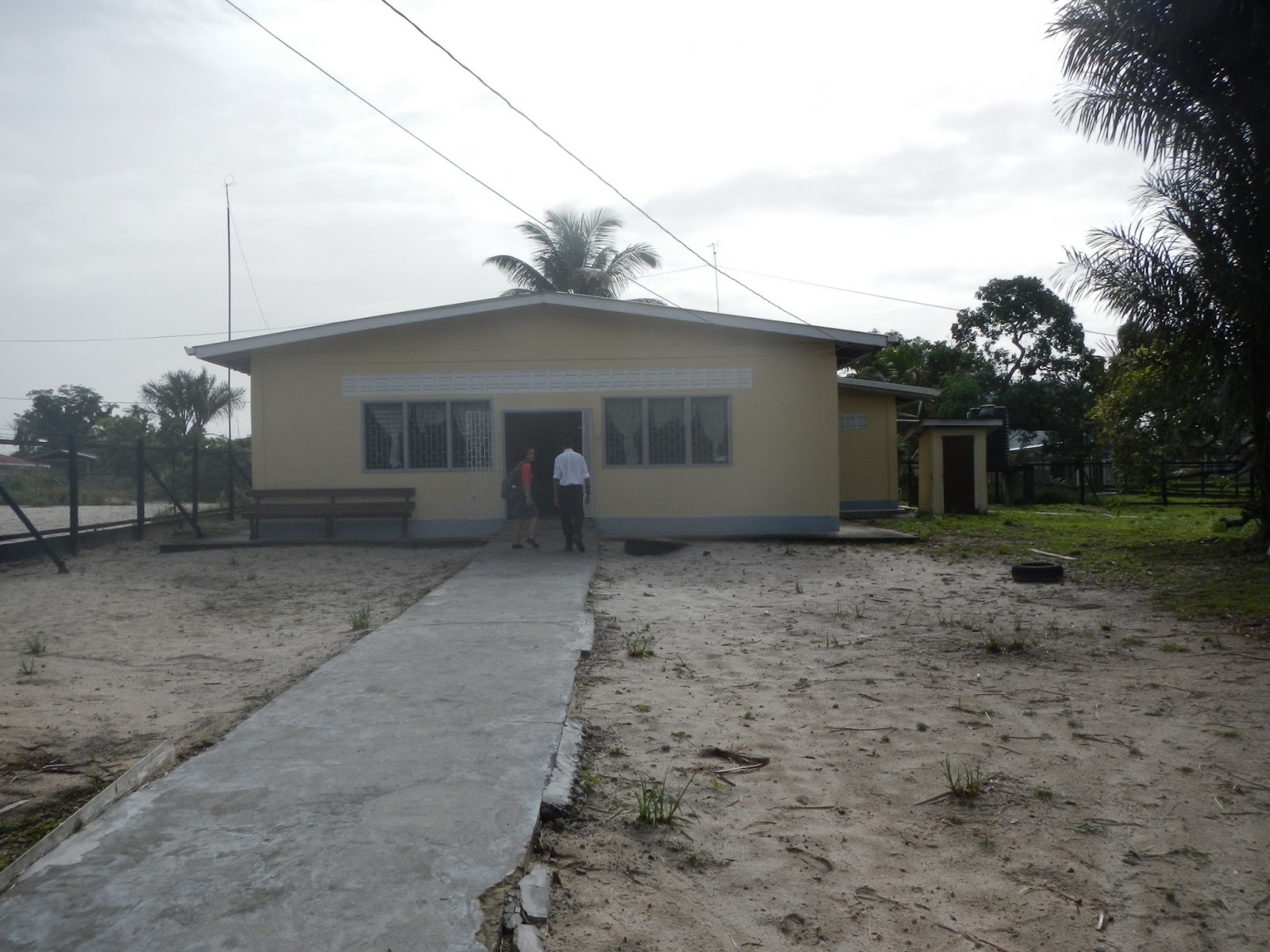
Timehri health center

Timehri health center

Timehri health center

The staff at Timehri health center, me and two other volunteers

Red Ground(s), the training ground/center

Red Ground(s), the training ground/center

View of Timehri, the town I'm training in

Grading coconut

Grading coconut

Cleaning chicken guts on the ground

Making roti

Vermizelli: it's pasta with butter, LOTS of sugar, and condensed milk. It's Buddy the Elf's dream dish

Eating vermizelli

Cleaning the Akuree

Cleaning the Akuree
Eating vermizelli


Cleaning the Akuree

Making roti

Making roti

My host family

Making roti

Dinner with my family

A lizard in my bed

Washing my clothes

Cleaning the rooster

Just chopped off the roosters head!

Just chopped off the roosters head!

Relaxing at home

Guyanese LOVE loud music! This is our family's sound system

Breakfast: chicken livers and roti

At the Fishery

At the Fishery

At the Fishery

At the Fishery

Monday, June 10, 2013

I’ll be finding out my post soon!

So a lot has happened since the last post. I left off with tomorrow I'd be going on a boat trip down river. That actually happened and it was awesome. We traveled down the Demerara River about an hour south of where I'm living. I was with the three medical staff in my health center as well as two other trainees that are assigned to the health center with me. I had assumed we'd just be helping out with routine tasks that we normally do in clinic, just at a remote site. However as soon as we got there I was in for a surprise. We docked at the primary school in the community and began carrying in supplies. Once everything was taken off the boat and into the school, the students were shuffled around a bit to make a space for a make shift clinic. The school is just one big room with a blackboard in the center to separate two different "classrooms," one older class and one younger class. Since it's the primary school it serves students ranging from first to sixth grade. However there were really only about 40 children (at most) in total. So all the students combined together on one side of the room (in one "classroom") and the makeshift clinic was held on the other side of the room. Once we dropped off the supplies the head master asked us (me and the two other trainees) what our role/job was in the clinic. We explained that we were with the PC and were working with the clinic. So right away he asked if we could do a health talk/presentation for all the students. We were caught off guard a bit, but since we had been preparing one presentation for the school in our community later that day we said yes. So while the doctor and nurses set up the clinic we went over to the other side and did the presentation. We taught the students how to wash their hands and we played Simon says (They call it Old Grady says) with hand washing motions. The best part was after we had finished the presentation and had gone to work with the clinic; we could hear the students outside on their break singing the ABC song (we taught them to sing their ABC's while they wash their hands). So we went over to the windows and saw them practicing washing their hands and singing their ABC's. It was really great to see what we taught them stick, especially seeing them correct each other if they forgot a certain step. After the health presentation the head master pulled the three of us aside and wanted to know if we could come back to do a workshop with the community. He outlined several topics he thought the community could really benefit from. In addition to coming back to lead a health workshop, he really wanted us to help train the teens in the community to be able to facilitate additional health sessions after we leave so the community continues to learn. That blew us out of the water. When we went in thinking we'd help out with screening patients to being asked to come back to help train peer educators really was the first time that I felt an impact was made. Seeing all the children so excited when we got there and having fun outside just practicing washing their hands really struck a chord. That day was probably my first "high" of service.

Part of training involves planning and executing a community health program. So me and the other two trainees that I've been working with agreed that going back to the river community to facilitate a day workshop would be a great idea. We met with the head master when he was on his way back from Georgetown to plan out the logistics of the workshop and develop an agenda for the day for which topics we would include. We had been working on this workshop in our off time outside of training to try and make this happen. Unfortunately due to timing and funding issue we have to scrap the workshop. So we are putting together a packet of materials for the head master so he can facilitate the sessions we were going to run.

On top of planning for that workshop we've done another school presentation, a workshop with the staff in the health center, and I've had to plan and present a presentation by myself during training. So these past few weeks have been anything but relaxing. And this is still on top of the training schedule of learning sessions and clinic sessions.

This week we'll find out what sites we're assigned to/where in the country we're going. So FINALLY you'll be able to sleep at night knowing where in the country I'll be. It's only been 6 months. We go to Georgetown this weekend and meet our counterpart (a Guyanese who I'll be working alongside for the next two years) at a conference for a few days, then we'll move to our new site and stay with the new family for a few days before returning back to the community I'm currently in to finish the last month of training. Assuming I make it through, I'll swear in as a volunteer on July 3rd, and officially move to my new site on the fourth.

Here's to the latest comments:

I live on a compound with two houses (currently in the process of building a third) so there's quite a few people in my family from just over a year old to I'm assuming in the 70's; it's a multigenerational family spanning from a great-grandma to great-grandchildren with three siblings in in my immediate family.

Remember that Guyana is in the Caribbean (they were the founders of Caricom (Caribbean Community) similar to the EU) so my family speaks Creolese; it's based off English. The best way to describe it is if you moved to another part of the states where all they spoke was slang. Yes its English based, but just because you hear the words doesn't mean you'd understand anything they'd say or know the meaning of the words. So in essence it's a foreign language. The tricky part of language courses through the PC in Guyana, is that Creolese is a constantly changing and evolving language without any grammatical rules or structure so it's a challenge for PC to train their volunteers in the language (unlike teaching Spanish, French, Swahili, etc.). It's best learned through experience, and being in country for almost a month and a half and I'm only starting to understand it.

The food is both familiar and new at the same time. It's a combination of Indian influences like roti and curry with local foods and ways of preparing foods like calalloo and egg balls. Whereas in the states we have certain foods reserved for breakfast (e.g. eggs and bacon) there's no real separation in what's prepared for certain meals. So I can have anything for breakfast from scrambled eggs and sausage (hot dogs) to chicken feet and boiled provisions (cassava, eddo, plantain, etc.), to boiled chickpeas. Lunch is always with rice. So rice and fried fish, chicken guts (liver, hearts, gizzards), pumpkin stew, etc. Dinner is almost always with some form of roti (oil, sada, eddo), which is a type of Indian flatbread and a meat whether its fish, guts, just liver, or just gizzards, chicken (I killed, plucked, and gutted my first rooster with pics to come), and we've even had an acuree (a type of bush meat). Guyana fries everything. There is a TON of oil in almost everything, so that took some getting used to. Along with sugar and salt. There's a lot of sugar used, and a lot of salt and MSG (which after doing some research, I'm starting to like using MSG in foods). Controlling my sugar levels was quite a challenge at first (and still is sometimes) because of all the added sugar to foods. But so far I'm really liking the food, which I wasn't surprised about at all. The biggest difference in Guyanese foods is that there are a lot of the same foods in the states just prepared differently. For example I've had hotdogs for breakfast, but the hotdogs here (called sausages) are chicken dogs served cold with mayo, sometimes ketchup and mustard, shredded carrots and shredded white cheese on top. Or Chinese fried rice or chow mein served with ketchup all over and mayo and some people add mustard too. So that took some getting used to. If you're planning on visiting Guyana, to prepare your stomach (and entire digestive system) here's a good recipe to re-tox your body so it won't be such a shock to your system when you arrive: Equal parts Sriracha, brown sugar, and vegetable oil. Season heavily with mayo and MSG to taste. Drink 3 times daily for at least a week. That should be enough time for your body to get used to the food. You can then detox when you're back in the states. Don't worry though there are plenty of fresh fruits all the time. That is something that is really nice about my meals here. Everything is fresh; I haven't had leftovers since I arrived. Meals are normally prepared twice a day, once in the morning for breakfast and lunch, and a second time for dinner later in the night.

I walk almost everywhere. I walk to training both at the health center for clinic as well as the training grounds for sessions. The primary school is also within walking distance. The only time I've taken a bus is to go to Georgetown to go to the market and/or the fishery where local fishermen bring in their catch for the day. We go to town at least once a week to buy food for the rest of the week. Georgetown is a typical busy capital city without the skyscrapers. It's here more than anywhere else I've noticed that it's apparent the Dutch settled in the country before the British. Many of the buildings are old wooden structures still standing from the time the Dutch colonized. The wood is more ornate than a typical concrete building which gives the capital its charm (it's the garbage all over that takes away from the beauty).

The local beer taste like I expected, pretty typical "beer" taste. There's Banks and Banks Premium, which is the local Guyanese brewery, and then from the rest of the Caribbean we have Stag, Mackison, Carib, Parbo (from Suriname), and Guinness Foreign Extra! Which I've loved since I first had it in Ghana. They definitely don't compare to Colorado beers, but I'll survive for the next two years.

Keep thinking of more questions you have I'd love to answer them.

Wednesday, May 22, 2013

Welcome to the rainy season!

After a little over 24 hours in Philadelphia, a bus ride to JFK, 6 hours waiting for my flight (spent at an Irish pub with plenty of beer and a burger and fries as my last meal in America), we finally landed right outside the capital of Georgetown in Guyana. Since no one from Peace Corps was flying with us, we had to get through immigration and customs by ourselves. This seemingly wasn’t that hard, however once 30 some of us got off the plane on the tarmac and walked into the immigration line, a real puzzled looking immigration officer approached us and wanted to know what we were doing (it was VERY clear that we were out of place being the only white people at the airport, I had a good laugh). We explained that we were with the US Peace Corps, to which she inquired how long we’d be staying in country. When we said a little over 2 years she was even more thrown off replying that she could only permit us entry for 3 months, so we told her we’d work with the US Embassy to extend our visas. Once we got our bags and walked out of the gate a group of currently serving Peace Corps Volunteers and Staff was cheering as we walked out. I’ll never forget what they said. I had expected them to say, “Welcome to Guyana.” But instead, “Welcome to the rainy season!” It was pouring POURING rain. And we had to carry all our luggage out in the rain to a truck they brought for us. It has been raining hard at some point every day since I arrived in country, which I must say I really enjoy waking up in the morning and listening to the rain fall on my family’s tin roof.

Want to know what I’ve been up to? To a certain extent I feel like I’m in college again and am in the process of joining another fraternity. After the airport they took us to a local resort (think really old Wisconsin Dells hotel/resort), where I spent the next four days. This was pretty similar to rush week. In addition to more get-to-know-you games we had training sessions all throughout the day from safety (how to ride public transportation (busses and boats), riding bicycles (including a written and ridding test), safety in and around the home and country, a swim and kayak test), how the PC functions, the roles of all the staff members, some culture classes, medical (basic water sanitation, how to stay healthy in country, getting additional vaccines and malaria meds), along with other sessions all to prepare us for our Community Based Training sites where we’ll be living with a host family, attend additional training sessions, and working at a health clinic all in the same community. After the four days we found out where we would be living (which community we would be in for the next 3 months) and which family we would have. This was really similar to bid day, where everything was really secret and a lot of buildup to finding out who our family was.

Now I’m pretty much in Peace Corps Pledge. My schedule is extremely regimented as I have training from 8 to 5 Monday, Wednesday, and Friday, and half day on Saturday. Tuesday and Thursdays are spent mostly at the health clinic. When I’m not at the health clinic those days, I’m either visiting the local primary school (observing or giving health presentations) or back at the training site with more training lessons. The training lessons are like going to school, in fact that’s what my family refers to it as. They pack my lunch every day and “send me off to school.” They build off of what was covered during the sessions spent at Splashmins (the resort the first four days) as well as additional lessons. The training areas are broken down into segments: tech, core, language & culture, and medical. The tech sessions is where all the health volunteers learn about all the health specific topics like breastfeeding, communicable and non-communicable diseases, global health, how the Ministry of Health is set up, sanitation, nutrition, hygiene, etc. The education volunteers similarly are in sessions related to their sector. In core sessions this is where we learn topics such as how PC defines what a sustainable project is, how develop a lesson plan and objectives, assessment tools, etc. Language & culture is where we have our creolese lessons, learn more about food, music, cricket (pretty much the only sport), history, etc. And the medical sessions cover additional topics like malaria, how to sanitize water safely, how to prevent/treat diarrhea, as well as other safety & security topics. Not having been in school for a bit definitely took some getting used to sitting in class for extended hours.

In the health clinic I’m helping out with routine tasks like the intake process of infant and child clinic where I measure and weigh the babies and children, help organize the medical files of the children, help out with the outtake interviews where I chart the child’s growth progress based on their weight and height and make assessments based on their respective charts. For example if the child is overweight or underweight I advise on altering the child’s diet or how much they’re eating. I also interview the parents (mostly mothers) on what the child is eating if they’re getting enough of all the food groups (I have their charts to guide us). Weighing and measuring is a pretty simple task to do, but interviewing the parents and making assessments based off of what I think is best was pretty much thrust upon me with limited training. However, basic American health education does wonders for me in helping to advise parents on their children (i.e. “if your child is overweight, instead of eating junk food, maybe eat off of the half a dozen fruit trees growing in your yard,” or “your child is underweight, they should be incorporating more staples and protein in their diet in addition to continued breastfeeding”) as American elementary health education is far greater than what is known in Guyana. Any other problems the child may have (rash, continued cough, bumps, etc.) I refer to the nurse or doctor to look at as well as all vaccines they’d need. In addition to the intake and outtake process of the infant and child clinics I observe the medical staff with all other medical problems and dressings they take care of. Tomorrow I’ll be doing a special outreach with the medical staff. I’ll be traveling by boat upriver to communities who are more remote that do not have access to a health clinic to administer vaccines and see any medical problems in the community.

When I’m not in training or the health clinic I’m spending time with my family from cooking dinner, going to the market, washing clothes by hand, walking around the community, attending a funeral, spending time at home with extended family, or helping build the addition to the house. I really don’t have any free time for the most part or any days to sleep in as the only day I have off (Sunday) we get up early to go the market. There’s always something going on. The mornings start early with all the roosters crowing before sunrise and the nights end late by the time dinner is over and cleaned up time spent hanging out and bucket bathing at night, then it starts all over again.

All of this is just in preparation for making it through the 3 month pledge program, or should I say Pre Service Training where I’ll eventually find out what house I’ll be in, or what family I’ll be living with and where in the country I’ll be sent to. If I make it through, then I’ll be sworn in as an official Volunteer for the United States Peace Corps on July 3rd and move out to site on the fourth.
I hope this tides you over for now, I’ll be sure to write more blog posts, but please feel free to comment with any other questions you may have or anything you want to know so I can include it in the following posts.

Wednesday, April 3, 2013

Do you know where you’ll be living or what you’ll be doing?

No.

Sorry, I only KNOW 3 things:
1) I’ll be living in the country of Guyana for 27 months
2) My job is in the health program
3) I leave April 30th

Everything else I won’t find out until after I leave. Don’t worry though; once I find out I’ll be sure to fill you out via this blog. So hang tight in the mean time!

“David… How much does your ‘trip’ cost?”


I get this question A LOT. First off, it’s not a trip it’s a job. PLEASE REMEMBER THAT! It resembles many aspects of other jobs (e.g. Paid Time Off/vacation days, paid training, a somewhat regular work schedule, etc.). One wouldn’t ask a US soldier, “Hey Joe, do you have to pay for that assault rifle? Who covers your plane ticket to Afghanistan, you or the military?”

You kind of need to think of the Peace Corps in similar terms. The PC pays for my plane ticket to and from my country of service (Guyana). If I decide to travel either throughout Guyana, South America, or even back to the States during my 27 months, then I’m responsible for that (out of personal savings). But the PC is responsible for getting me to and from Guyana at the beginning and the end of my service.

Though I may not come out of the PC a millionaire, I won’t be accruing bills/debt from my time spent in country. Technically speaking I never get “paid.” I may work a 30h work week, but I won’t be paid a US$7.25/h wage. That would be WAY too much money for the community I live in. If the family I live with and the rest of the members in my community live off of $1 a day then I would be a king making a US minimum hourly wage. What would I need all that extra money for? Yes, making that extra money would be nice, but you need to remember that if I’m to live in a community with very little, not living at the level of my community would ruin my credibility resulting in a disconnect with my community and would be a disadvantage with any of the projects I try and implement as a “rich American.”

Instead all volunteers receive a living stipend. This is enough money to live off of every month. The amount volunteers receive for their living stipend depends on which country they’re in. Some countries have a higher standard of living, demanding a higher living stipend. Whereas other countries have a drastically lower standard of living driving down the amount of the stipend needed. This includes housing. It’ll depend on where I end up living. If I live in an apartment, my rent will be included in the living stipend. And if I live with a host family my stipend will include money for my family’s house bills. The stipend is used to cover food, bills, and transportation costs (locally). I may not be able to save a ton from my stipend to fund my IRA, but again, I’m not responsible for covering my costs from my personal savings.

The same goes for all medical care. The PC is responsible for covering all medical insurance costs as well as any/all treatment. This includes my day to day necessities like insulin, pump supplies, glucose testing strips, etc. As well as if I get sick and need to seek out any medical care until I recover.

I hope this helps answer any questions along those lines. Let me know if you have more.